LESSON OVERVIEW
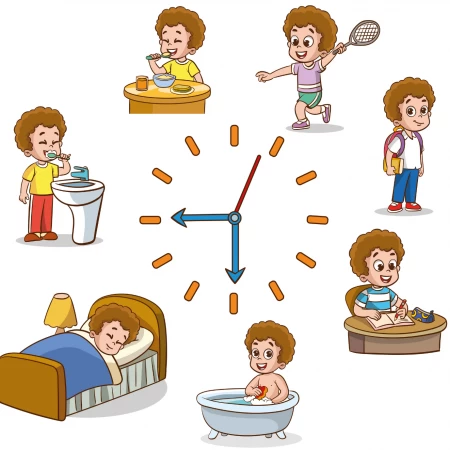
If you repeat a behavior often enough, it becomes a habit. In this lesson, students will learn about the zero conditional – a grammar structure used to express general truths, scientific facts, habits, and everyday situations. Students will explore new vocabulary related to the topic and practice using real-life examples. The lesson includes engaging exercises and thought-provoking questions to help students use the zero conditional in both speaking and writing. It’s ideal for learners at the A2–B1 level.
LESSON OBJECTIVES
Grammar: Students will study and practice the zero conditional. They will learn how to build sentences using this grammar concept and understand when to use it.
Speaking: Students will take part in conversation activities where they discuss daily routines, general truths, and science facts. They will use new vocabulary and the zero conditional in their answers.
Vocabulary: The lesson will teach students important words like “habit,” “routine,” and “general truth.” These words will be used in activities to help students understand and remember them.
Homework: Students will complete different exercises to practice the zero conditional. First, they will choose the correct answer to finish sentences about everyday situations. Then, they will read sentences and decide if they are true or false. After that, they will say if they agree or disagree with some statements and write a new sentence that says the opposite. These exercises will help students remember the grammar and use it in real-life situations.
VOCABULARY AND PRONUNCIATION
- general truths [noun]: statements or facts that are universally accepted as true.
- routine [noun]: a regular course of procedure or customary way of doing things.
- zero conditional [noun]: a grammatical structure used to describe general truths or habitual actions
- cavity [noun]: a decayed part of a tooth caused by bacteria.
- spill [verb]: to accidentally cause a liquid to flow over the edge of its container.
- fit [adjective]: in good health, typically as a result of regular exercise.
- melt [verb]: to change from a solid to a liquid state, usually due to heat.
- helmet [noun]: a protective headgear worn to protect against injuries.
- germs [noun]: microorganisms, especially those that cause disease.
- old habits die hard [idiom]: It’s difficult to change established habits.
- spoil [verb]: to cause something to go bad or decay, especially food.