LESSON OVERVIEW
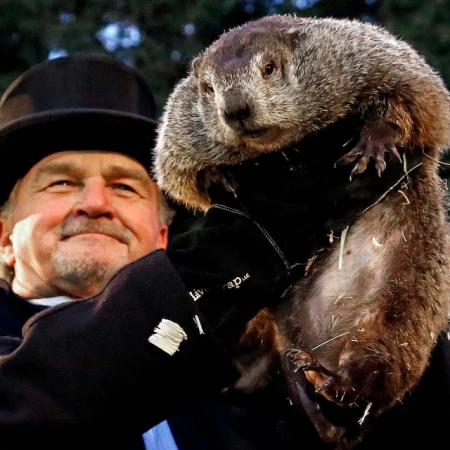
Oh no… Six more weeks of winter! In this lesson, students will dive into the tradition of Groundhog Day, learning about its origins, how it’s celebrated in Punxsutawney, Pennsylvania, and why it still captures people’s attention today. They’ll watch a video that explains the history behind the event and explore key vocabulary with real-life examples to help them use new words naturally. With interactive exercises and engaging discussion questions, students will have plenty of opportunities to practice speaking, share their thoughts, and build confidence in using English. Perfect for upper-intermediate and advanced learners, this lesson sparks curiosity and encourages meaningful conversations about the tradition and its significance.
LESSON OBJECTIVES
Listening: Students will watch a video about Groundhog Day, learning about the role of the groundhog, its weather predictions, and the cultural significance of the holiday. This activity helps improve their ability to understand detailed explanations and discussions relating to the topic.
Speaking: Students will participate in discussions to share their thoughts on Groundhog Day, weather-related traditions, and modern interpretations, using the new vocabulary they’ve learned.
Vocabulary: Students will learn and practice key terms such as “shadow,” “burrow,” and “hibernation” through engaging activities.
Cultural Awareness:Students will learn about the origins and meaning of Groundhog Day, starting with its roots in the German Candlemas tradition, where people used a badger to predict the weather. When the tradition came to the U.S., groundhogs were used instead because they are native to the region. The lesson shows how folklore and science come together and how traditions can change in different cultures.
Homework: Tasks include answering video-related questions, completing fill-in-the-blank exercises with key terms, and using pictures to spark discussions. These activities are designed to strengthen understanding of the lesson’s themes and their relevance to today’s values.
VIDEO
Have you heard of Groundhog Day before? Do you know the significance of seeing its shadow on February 2? Watch this video to learn about the origins of Groundhog Day and how it is celebrated today.
VIDEO TRANSCRIPT
As the tradition goes, every year on February 2nd, Phil the groundhog comes out of his hole in Puxatawney, Pennsylvania. If he sees his shadow, we’ll supposedly get six more weeks of winter. If he doesn’t see his shadow, winter is supposedly over. Seems bizarre, right? So, how exactly did groundhogs become the go-to animal for predicting the weather? That’s not bad for a quadruped. You gotta check your mirrors, just the side of your eye, side of your eye.
The tradition comes from Germany. On an old religious holiday called Candlemas Day, the Germans paid attention to the badger. Candlemas Day was the midpoint between winter solstice and the spring equinox, around February 2nd. If the badger saw its shadow, it meant that a second winter was coming. When the practice came to the U.S. in 1887, the groundhog was chosen because badgers aren’t native to eastern North America.
While it may seem random, there is some logic to turning to the groundhog for weather predictions. Like badgers, groundhogs, also known as woodchucks or whistlepigs, are considered true hibernators. When they emerge from hibernation, it means winter is almost over. In winter months, their body temperature drops 62 degrees. Comparatively, if a human body temperature drops just 4 degrees, it goes into hypothermia. A groundhog’s hibernating heartbeat is only 5 beats per minute. In warmer months, its heart beats 80 times per minute. Their breathing slows down in winter, too. It can go from 16 breaths per minute to about 2 during hibernation.
However, the idea that groundhogs are predicting the weather when they come out of hibernation may be a bit of a stretch. The real reason groundhogs come out of their holes in early February is to look for mates. Mating season is in March, so they wake up a little early to scope out potential partners and then return to their burrow to wait out the winter. Whether the groundhog sees its shadow on February 2nd has more to do with the weather that day than the groundhog itself. After all, Tuxetani Phil has only been right about 30% of the time. So we’re probably better off listening to meteorologists, or just flipping a coin.