LESSON OVERVIEW
You better watch what you eat! In this lesson, students will explore the difference between healthy and unhealthy food. The lesson features a video that explains how food labels can be misleading, tricking us into thinking certain foods are healthy. Students will learn and practice phrasal verbs, idioms, and related vocabulary. The lesson includes plenty of engaging discussion activities and worksheets designed for both adult and teenage learners, ensuring a fun and informative learning experience.
LESSON OBJECTIVES
Grammar: Students will learn and practice using phrasal verbs related to food and health, such as “set straight,” “go down the list,” and “stay away from.” These verbs will help students discuss food labels and choices more effectively.
Listening: Students will listen to a video featuring a discussion on misleading food labels and misconceptions about healthy eating. This activity will focus on sharpening their ability to discern key information and understand real-world English usage in context.
Speaking: Through guided discussions, students will express their opinions on different foods they consider healthy or unhealthy based on the video and their own experiences. This will enhance their conversational skills and ability to use newly learned vocabulary and phrases.
Vocabulary: Key terms such as “sugar-free,” “organic,” “fermented,” “glycemic index,” and idioms like “run into trouble” and “go down the list” will be introduced. Students will practice these words and phrases through various engaging activities to better discuss health and nutrition.
Cultural Awareness: Students may explore how cultural perceptions influence what is considered healthy, discussing global differences in food labeling and marketing practices.
Homework: Students will be tasked with researching different food labels and writing a short paragraph about a misleading food item. They will also create a list of healthier alternatives to common unhealthy snacks, applying vocabulary and concepts learned in class.
VIDEO
Sugar-free, all-natural, organic. These nutrition-related buzzwords can effectively trick people into believing they’re buying healthy food, but are they really as good for you as you think? Watch the video to see how food labels can mislead people and find out which alternatives are the best to buy instead.
VIDEO TRANSCRIPT
-Well, most of us think we’re doing our best to eat healthy, but there’s still a lot of confusion surrounding labeling, advertising. We hear those buzzwords like sugar free, all natural, organic. But it’s really confusing, so we have Tina Sprinkle owner of Pilates 1901 here to set us straight. Set of straight, Tina.
-All right, we’re gonna go just go down the list.
-But you’re starting with OJ, which to me is, like, but, but that’s healthy.
-Not so healthy. But, you know, [yeah] in this one liter of orange juice, you have about 45 grams of sugar and a liter of, of, Coca-Cola or pop has 50. [Ooh]. And it’s not just glucose, it’s fructose, which is, like, really, really hard for the body to process. It gets processed in the liver and it makes us want to store fat.
-But even, even, if it’s a natural sugar, it’s still too much?
-It’s just too much. [Too much]. So, in an eight-ounce glass of orange juice, you have the juice of four oranges. [Yeah]. Eat an orange.
-Yeah, eat an orange.
-Eat an orange.
-And then you get the fiber [the fiber] and all that good stuff. Okay.
-Next we’re talking about soy proteins. These are unfermented sources. They’re not as good. [Yeah]. In fact, soy has been linked to all different kinds of cancers, [yeah] heart disease, lots of different diseases. So, when you go for soy, you want to look for Tempe, [fermented] fermented.
-Tempe, that is my favorite.
-If you really are a soy sauce, you know, person, another good substitute for that is the coconut aminos.
-This is great. These are from Indonesia and these, actually, these two Tempe and this go really well together. [They do]. They’re so good. And then sweeteners, there’s always a lot of debate about what’s a healthy sweetener.
-And you think, you think by now people would know not to do these artificial sweeteners, [yes] but a lot of doctors still recommend them because they don’t affect the glycemic index. [Okay]. This one you don’t want to get it at all because it’s gastric. A lot of gastric distress.
-Xylitol. Okay, [yes] so stay away from Xylitol.
-You know, the blue one and all that stuff, still very linked to cancers, all kinds of, yeah, heart disease. [Yeah]. So, bad stuff. [Not good]. Now, this we think is healthy, right?
-Is this honey?
-This is agave nectar.
-Oh, agave nectar, [yeah]. Okay.
-It is the highest source of fructose in any sweetener on the market.
-But I thought that one was good for you too.
-I know. So, did I.
-You are killing me!
-So, if you’re going to do an artificial sweetener, which I’m sorry I don’t recommend, [yeah] Stevia. [Stevia]. Stevia is still the best one. Right.
-Which actually happens to be what I put in my coffee. I’m a big fan of Stevia as well.
-Stevia is the best one. [Yeah].
-It’s good stuff. And then popcorn.
-Yeah, if it comes in a box, it’s probably not real food, right?
-Yeah. I’m guilty of this.
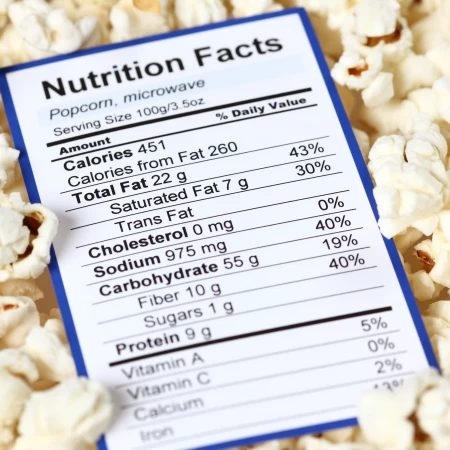
-This is the one that’s full of really, really bad carcinogens. [Yeah]. So, it’s not just the butter, the fake butter but the inside of the lining of the bags.
-That’s what you want to avoid. [This is..no]. Get this stuff. Pop it yourself.
-You can do an air popper, or you could do, like, I just do like my grandma did in a cast iron skillet with some butter, and it’s delicious.
-Or some coconut oil.
-Well, coconut oil, [maybe] well yes. But definitely not this. [Okay].
-Not the vegetable oil. [Yeah]. Right? Stay away from that.
-If you really need, trouble, I mean, you know, to stay away from this, watch that YouTube video on how they process the vegetables.
-So, let’s avoid margarine. Let’s avoid the vegetable oil. Ghee is really great.
-Ghee and coconut oil.
-And coconut oil. And then last…
VOCABULARY AND PRONUNCIATION
- buzzword [noun]: a word or expression that is very popular and trendy
- set something straight [phrasal verb]: to make certain that someone understands the real facts about a situation
- fructose [noun]: a type of sugar that occurs naturally in fruit, vegetables, and honey
- gastric [adjective]: involving the stomach
- carcinogen [noun]: a substance that tends to cause cancer
- margarine [noun]: a food product similar to butter, usually made from vegetable oil
- ghee [noun]: a type of clarified butter, usually used in South Asian cuisines
- dietary [adjective]: relating to a diet