LESSON OVERVIEW
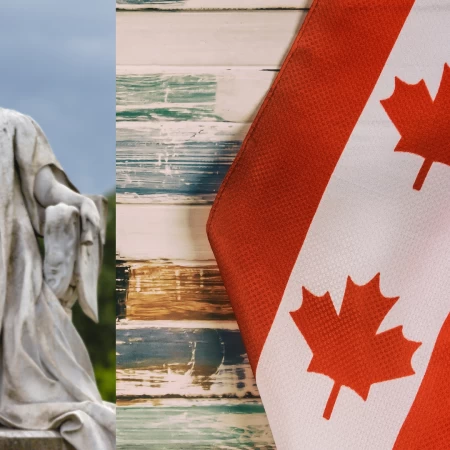
Fit for a queen! This fun and interactive ESL lesson is perfect for elementary to intermediate (A2–B1) learners who want to improve their English while learning about Victoria Day in Canada. Students start by chatting about holidays and sharing their own experiences. Then, they watch a short video to find out who Queen Victoria was and why this day is still celebrated. After that, they read a short text and complete vocabulary activities to build their language skills. The lesson wraps up with a lively discussion where students talk about how holidays are celebrated in their own countries – and even create a new holiday of their own. It’s a great way to build confidence, learn useful vocabulary, and explore culture in an engaging way.
LESSON OBJECTIVES
Listening: Students will watch a video about Victoria Day celebrations and its importance in Canadian history. The speaker discusses Queen Victoria’s legacy, how the holiday originated, and modern traditions like parades and fireworks. This listening activity will enhance students’ ability to comprehend detailed explanations and discussions in English, focusing on vocabulary and concepts related to the topic.
Speaking: The conversation activities will encourage students to express their views on national holidays and why they are important, using newly learned vocabulary and idioms.
Vocabulary: Students will learn and practice key vocabulary related to Victoria Day, Canadian culture, and national holidays. Words such as holiday, celebration, parade, fireworks, legacy, monarch, cottage, and summer will be introduced through pictures, reading, listening, and discussion tasks. The vocabulary activities are designed to help students understand the meaning of each term in context, use the words in full sentences, and apply them during speaking activities.
Cultural Awareness: Students will gain insight into Canadian traditions, values, and identity by exploring how national holidays like Victoria Day reflect historical milestones and shape cultural practices. Through comparisons with holidays in their own countries, students will develop a broader understanding of global celebrations and appreciate cultural diversity.
Homework: The tasks include answering questions about the video, filling in the blanks with key terms, and using pictures to discuss the topic. These exercises aim to reinforce the lesson’s vocabulary and concepts, helping students better understand the intricacies of Victoria Day and its role in Canadian culture.
VIDEO
What is an important national holiday in your country? Have you heard of Victoria Day before? Watch this video to explore the importance of Victoria Day, its historical ties to Queen Victoria, the reasons Canadians celebrate it, and the traditions that make it special.
VIDEO TRANSCRIPT
Happy Victoria Day! Why do we celebrate Victoria Day? Oh my! I’m not sure. I actually don’t know. It’s actually named in honour of the monarch behind me, Queen Victoria. Here at Queen’s Park in Toronto, also named in her honour. Victoria Day is meant to be a celebration of her birthday, but you can see on her special day there’s very little fanfare. Not many people came to visit.
So how much do Canadians really know about Victoria Day? The Rogers Centre was bustling with activity this afternoon for the Victoria Day Jays vs. Red Sox game, so I decided to give a few folks a pop quiz. Why do we celebrate Victoria Day, do you know? Uh… I have no idea. Why do we celebrate? Isn’t it Victoria’s… Queen Victoria’s Day, the main day. Yeah, it’s to celebrate the Queen’s birthday, right? Right. Queen Victoria was born on May 24, 1819. Hence why many in Ontario sometimes call the May long weekend May 2-4, though some may not realize it.
Is it called May 2-4? Why is it called that? Because you have to have four six-packs. No, you have to have one of the two-four. Queen Victoria was Queen before Canada was a country and also happens to be the one who chose Ottawa as our capital. In Ontario, we’ve been celebrating Victoria Day since 1845. It became a national holiday in 1901. She had great relationships with other countries and people and it’s very important to where we are now.
These days, the holiday is officially held on the Monday before May 25th and it also celebrates the birthday of the current sovereign, Victoria’s great-great-granddaughter, Queen Elizabeth II. Happy birthday. Happy birthday, Queen Victoria. Happy Victoria Day to you. Happy Victoria Day to you. Sorry.
So whether you went up to the cottage, fired up the barbecue or caught a ball game this long weekend, maybe sing a little happy birthday to Queen Victoria of House Hanover. She’s who you have to thank for this statutory holiday. At Queen’s Park, Erica Natividad, CityNews.
VOCABULARY AND PRONUNCIATION
- holiday [noun]: a special day of rest or celebration
- fireworks [noun]: bright explosions in the sky used for celebrations
- parade [noun]: a public procession with people marching or performin
- tradition [noun]: a custom passed down through generations
- monarch [noun]: a ruler, like a king or queen
- legacy [noun]: something left behind or remembered from the past
- historical [adjective]: related to history or the past
- celebration [noun]: a joyful event to mark an occasion
- honor [verb]: to show respect or recognition
- observe [verb]: to celebrate or recognize a holiday
- fit for a queen [adjective phrase]: luxurious or of high quality